
What actually goes into a wedding mandap
5 min read
From the outside a mandap is fabric and flowers. Underneath it is a load-bearing structure that has to hold all of it, outdoors, for a day.
5 min read
From the outside a mandap is fabric and flowers. Underneath it is a load-bearing structure that has to hold all of it, outdoors, for a day.
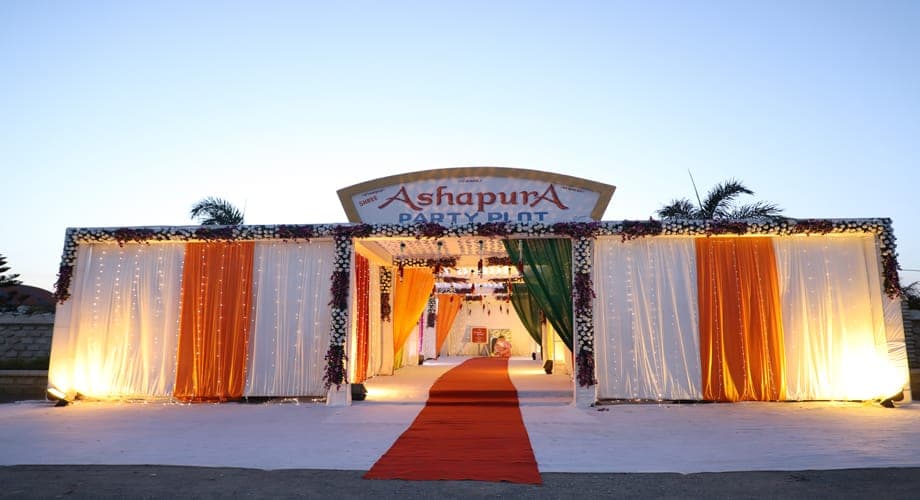
Everything visible hangs off a frame. Poles, cross-members and anchoring are set out before a single piece of fabric goes up, and they are sized for what will hang on them — a heavy floral canopy is a real load, particularly outdoors in wind.
On soft or uneven ground the anchoring changes. This is why a site visit affects the price.
Fabric is worked across the canopy, the entrance and often the ceiling of the whole venue. It is the element that changes the character of a space fastest, and the one most sensitive to how straight the structure underneath it is.
Natural and artificial floral work both need something to sit on. That framework is built as part of the structure rather than added at the end, because retrofitting a support for a heavy arrangement is how things sag by the evening.
Rigging for lighting and sound is planned with the structure, not after it. If the load and the power draw are worked out in advance, nobody is running cable across a guest walkway an hour before the ceremony.
A mandap is normally installed the day before the ceremony, with the venue handed over ready. Larger builds — full-site tenting, multi-day functions — start earlier and are struck over a longer window.
Tell us the date and venue and we'll come back within one business day.